
Design & Build
Choosing the Right Countertops: Materials and Maintenance
Countertops are more than just a kitchen surface—they set the tone for the entire space and influence how you cook, clean, and enjoy your kitchen day after day. From durability and maintenance to visual appeal and cost, the decision on which countertop material to install plays a central role in the success of your kitchen renovation.
At My House Design/Build Team, we’ve helped hundreds of homeowners in Greater Vancouver make informed choices about their kitchens. This guide is tailored to help you understand the variety of available kitchen countertop materials, how they perform over time, and what kind of care each surface requires.
Understanding the Role of Countertops in Kitchen Design
Countertops are one of the most frequently used surfaces in any home. Whether you’re chopping vegetables, placing hot pans, or entertaining guests, the surface must be resilient and easy to maintain. Beyond function, the aesthetic weight of the countertop helps unify cabinetry, backsplash, and flooring—making it essential to your kitchen’s overall design cohesion.
If you’re considering a full kitchen update, we encourage you to explore our kitchen renovation services to see how countertop selection fits into a holistic remodel plan.
Granite: A Natural Choice with Long-Term Appeal
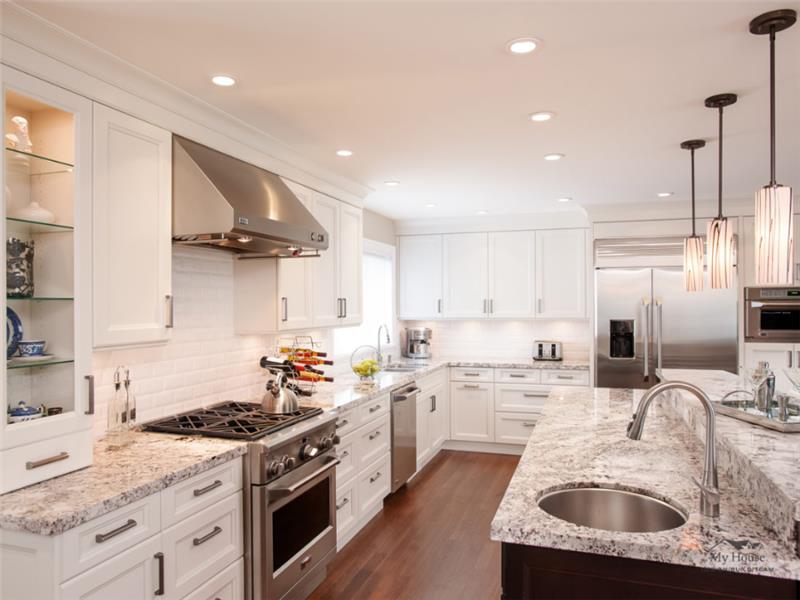
Granite remains a sought-after choice for many homeowners who value natural stone with unique patterns and earthy beauty. Each slab is different, offering variation in tone, grain, and veining that gives kitchens an exclusive, upscale feel.
This stone is incredibly durable, standing up to daily wear such as cutting, heat, and heavy usage. However, because it is a porous material, granite does require regular sealing to maintain its resistance to staining. In homes where cooking is frequent and surfaces endure daily messes, this maintenance step is crucial to ensuring the countertop remains hygienic and stain-free.
The luxurious look of granite adds significant value to a home, making it a timeless investment—particularly in high-end kitchen renovations where both form and function matter.
Quartz: A Modern Solution for Busy Homes
Quartz has surged in popularity as a reliable, low-maintenance alternative to natural stone. Unlike granite, quartz is engineered from crushed quartz crystals and binding resins, creating a non-porous surface that resists staining, bacteria, and moisture without any need for sealing.
What makes quartz particularly attractive is its consistency in pattern and colour. For homeowners seeking a sleek, clean look without the unpredictability of natural stone, quartz offers visual control and predictability. It’s also available in an impressive range of styles—from marble-like finishes to minimalist solid tones.
One thing to be cautious about is direct heat. While quartz can withstand daily cooking activities, placing hot pans directly on the surface can cause damage over time. Using trivets and heat pads is a simple way to protect your investment.
Laminate: Functional Style for Budget-Conscious Renovations
For homeowners looking to stay within a modest budget while still achieving a fresh look, laminate countertops are worth considering. Modern laminate surfaces have come a long way from the dated designs of the past, now offering styles that closely mimic the look of natural stone or wood at a fraction of the cost.
Laminate is lightweight, easy to install, and extremely easy to clean. It’s a particularly smart option for secondary kitchens, rental units, or homeowners who are renovating with resale in mind but still want a visually appealing surface.
However, laminate is more sensitive to cuts, scratches, and heat. Using cutting boards and trivets consistently will help extend the lifespan of the countertop and prevent permanent damage.
Butcher Block: Warmth and Texture for the Heart of the Home
Wood countertops offer a tactile warmth that’s difficult to match with stone or engineered surfaces. Butcher block, in particular, lends a cozy, farmhouse-style charm to kitchens and pairs beautifully with white cabinetry, open shelving, and soft, neutral palettes.
This material is functional as well—perfect for food prep and easy on knives—but it does require consistent care. Butcher block must be regularly treated with food-safe mineral oil or beeswax to maintain its surface integrity and prevent water absorption.
Homeowners who choose butcher block tend to appreciate the lived-in feel it develops over time. Scratches, minor stains, and wear can be sanded out, giving the surface a patina that evolves with your kitchen. However, it’s not the best choice for high-moisture zones without proper sealing.
Solid Surface (Acrylic/Resin): Seamless, Stylish, and Repairable
Solid surface countertops, like Corian, are composed of resin and natural minerals, giving them a smooth, seamless finish that works well in contemporary kitchens. These surfaces are prized for their ability to integrate sinks and backsplashes for a sleek, hygienic design.
One advantage of solid surface materials is their repairability. Scratches and dents can often be sanded out without needing to replace the entire surface. They also offer more flexibility in shape, making them suitable for custom kitchen layouts.
However, like laminate, they are sensitive to heat and can be scratched by sharp utensils. With moderate care, though, solid surface countertops offer a balance between form and function, especially in family kitchens where cleanliness and visual appeal matter.
Marble: Classic Elegance for Sophisticated Spaces
Marble has long been associated with luxury and elegance. Its soft veining and bright tones add light and refinement to any kitchen. Particularly popular in traditional or European-inspired interiors, marble countertops bring a sense of timelessness.
However, it’s important to know that marble is softer and more porous than granite or quartz, making it more vulnerable to staining, etching, and scratching. It requires consistent sealing and careful use, especially around acidic foods like lemon, vinegar, or tomato sauce.
For homeowners who love the aesthetic of marble but are concerned about upkeep, installing it on a kitchen island or baking station rather than the entire countertop surface can be a thoughtful compromise.
Concrete: Industrial Edge with Custom Potential
Concrete countertops have grown in popularity for modern and industrial-style kitchens. They offer an artisan quality that can be customized with pigments, aggregates, and textures. The result is a countertop that feels both raw and refined.
Because concrete is poured on-site or custom-made, homeowners have greater flexibility in size, shape, and edge profile. However, it does require sealing and can be prone to minor cracking if not properly reinforced or cured.
The visual impact of concrete is undeniable—particularly in open-concept kitchens where it pairs beautifully with exposed materials like brick, black hardware, or steel shelving.
Bringing It All Together in Your Renovation
Choosing a countertop is a blend of personal taste, lifestyle needs, and long-term practicality. Homeowners should consider how often they cook, how much maintenance they’re comfortable with, and how the countertop will interact with cabinetry, lighting, and flooring.
In one of our recent renovation projects in Vancouver, we installed a light-toned quartz surface alongside dark matte cabinetry and under-cabinet lighting to create a striking contrast that was easy to clean and maintain. The homeowner loved how the countertop unified the space while standing up to daily use.
For more examples, visit our kitchen gallery to see how different materials perform in real home settings.
Conclusion
Your countertop is more than just a surface—it’s the foundation of your kitchen’s style and function. Whether you’re drawn to the rich grains of butcher block, the natural strength of granite, or the ease of quartz, the right material will support your lifestyle and elevate your kitchen’s design.
Need guidance with your own renovation? Contact our experienced design/build team to schedule a consultation through our contact page. We’ll help you find a solution that blends style, performance, and durability perfectly suited to your home.
Frequently Asked Questions (FAQ)
How do I know which countertop material suits my lifestyle best?
Start by considering how often you cook, how much maintenance you’re willing to do, and what kind of aesthetic you want. Quartz is low-maintenance, granite is durable and natural, and butcher block adds warmth.
Is quartz better than granite for kitchens?
Quartz requires less maintenance and is non-porous, while granite offers a natural look with greater heat resistance. The choice depends on your design goals and how you use your kitchen daily.
How often do countertops like granite and marble need sealing?
Granite typically requires sealing once a year. Marble may need more frequent sealing depending on usage. Quartz and laminate do not require sealing at all.
Can I mix countertop materials in one kitchen?
Yes, combining materials like quartz on the perimeter and butcher block on the island creates visual interest and functional variety in the kitchen.
Are there countertop options that are both stylish and budget-friendly?
Modern laminates and some solid surface materials provide affordable style. While they may lack the longevity of stone, they can still elevate your kitchen’s look when properly maintained.